Squares

If you color squares with n colors at the four sides you get (n^4+n^2+2n)/4 one-sided and (n^4+2n^3+3n^2+2n)/8 two-sided distinct pieces.

Colors One-sided Pieces Two-sided Pieces
Number Examples Number Examples
3 45 6x4 rectangle 21
4 70 10x7 rectangle, 14x7 rectangle 55
5 165 15x11 rectangle, 33x5 rectangle 120 12x10 rectangle
6 336 21x16 rectangle 231 21x11 rectangle
7 616 44x14 rectangle 406 29x14 rectangle
8 1044 36x29 rectangle 666

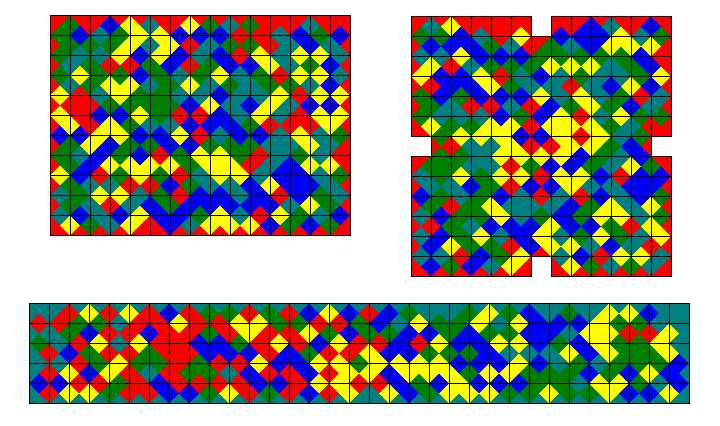
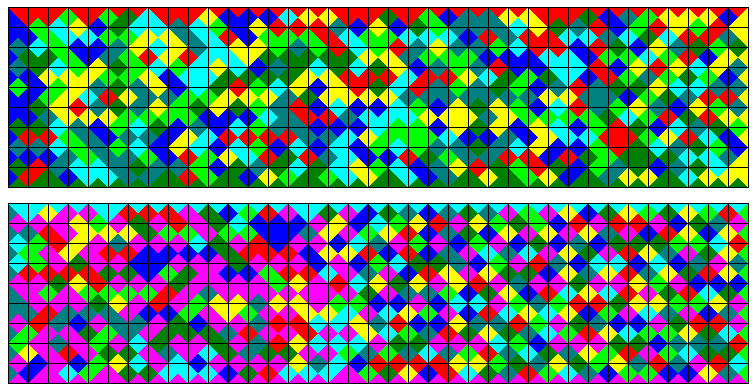
Only one construction with seven different edges types (406 pieces in a 29x14 rectangle) is shown, some other can be found at Andrew Clarke's site.


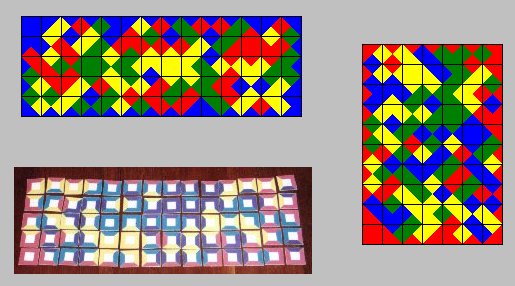
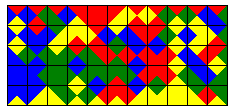
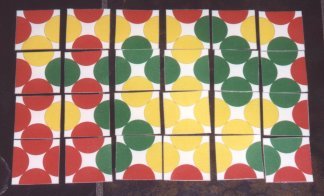
3 colors, 24 one-sided pieces:

If yellow and green should match, the puzzle is also solvable. In this case it's equivalent to a puzzle with three different edge types (red=straight, green =male, yellow=female).


4 colors, 70 one-sided pieces:

With some patience you can make a 10x7 and a 14x5 rectangle. I have solved both puzzles manually, but it took me a couple of hours. For a computer program it's rather easy.


5 colors, 165 one-sided pieces:


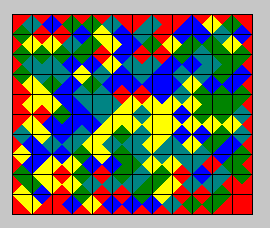
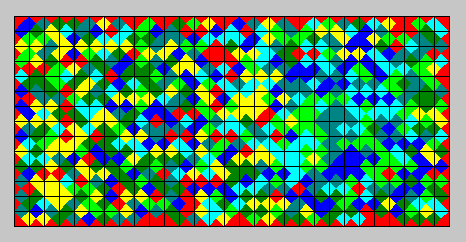
5 colors, 120 two-sided pieces:


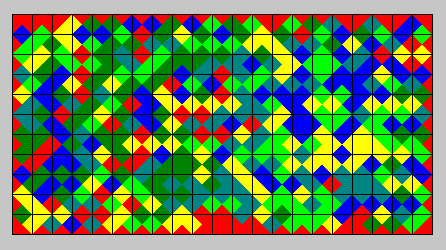
6 colors, 336 one-sided pieces:


6 colors, 231 two-sided pieces:


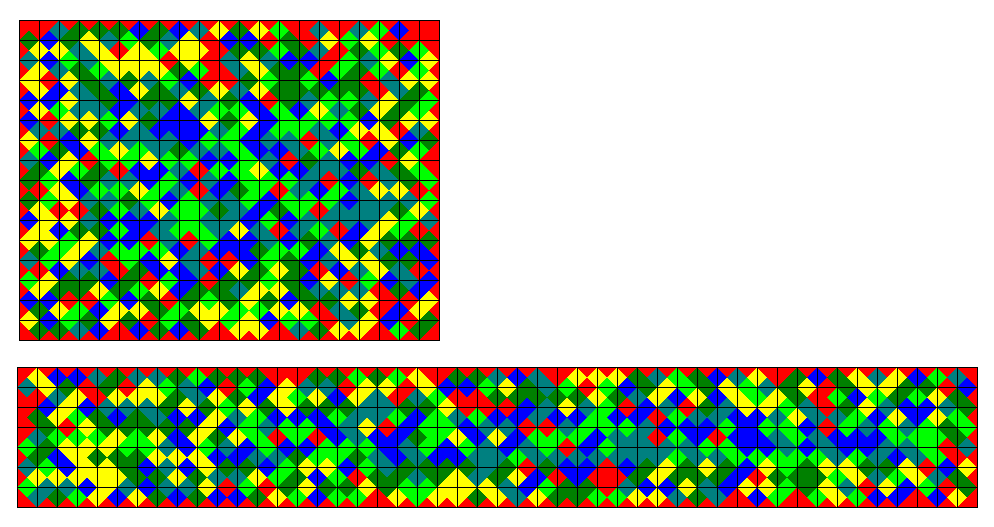
7 colors, 616 one-sided pieces:

The last part of the construction is at the right border and a lot of pieces with the border color must be saved for the endgame. For one sided pieces this strategy worked, but for the two sided I got some problems.


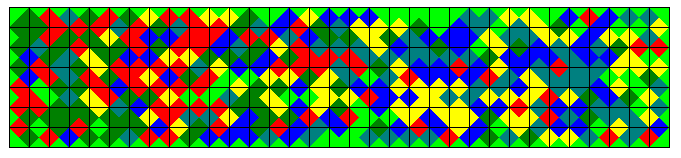
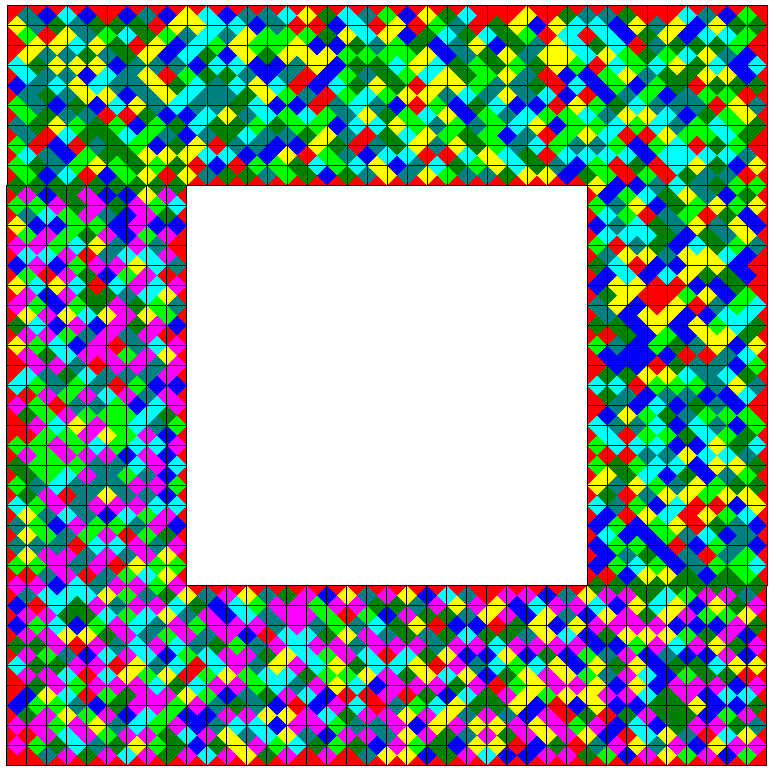
7 colors, 406 two-sided pieces:

For the two sided pieces the area for the endgame is a square in the right part of the construction not touching the border. Pieces with two or more red, dark green or yellow edges are used first, then pieces with at least one edge of the mentioned colors are preferred and for the last part of the puzzle only few pieces with these "bad" colors. are left.


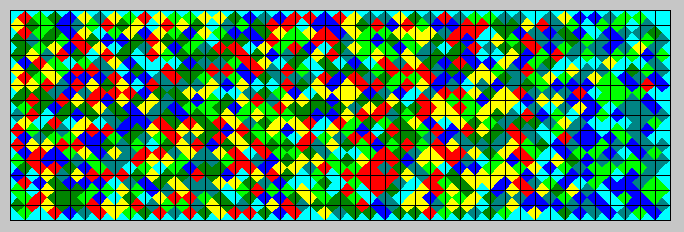
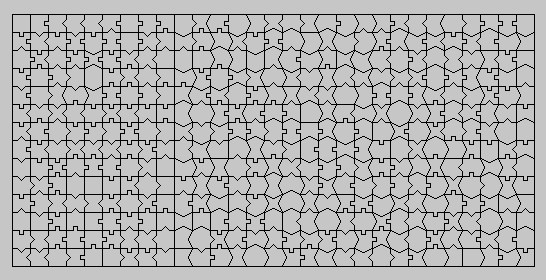
7 different edge types, 406 two-sided pieces:

With different edge types the construction is a bit easier and the endgame can be done at the border.


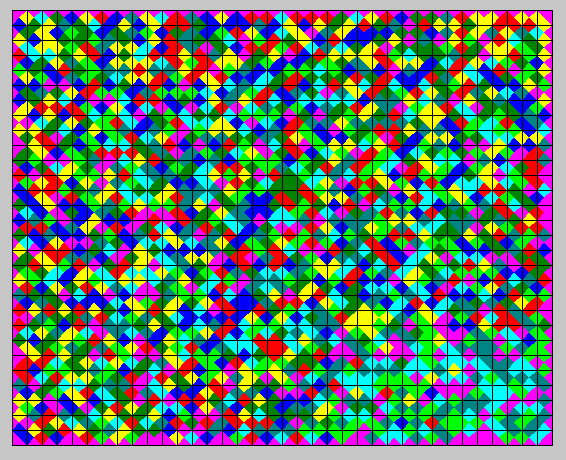
8 colors, 1044 one-sided pieces:


Index